DAWNING
Even in my happy indifference to athletics, striving is something I could understand. The Olympian presses on toward the moment that will redeem the years and pleasures and normalcy he had laid on the altar of glory, challenging the unrivaled to best himself. But men who attack one another—invite the blows and blood—and go on to hug after beating the brains out of each other? (Right, it is women who make no sense.) Baffling brutes, I’ve thought.
A year or so after my boy had started in Mixed Martial Arts and I too had learned some moves in self-defense, I was strolling past the octagon at the gym when the sparring there took on a startling light. Suddenly, the irrational violence I’d dismissed made every bit of sense, and the fluid logic of the moves blew me away in its beauty. So this was the art of war.
WONDER
I became intrigued by men who put themselves in harm’s way, not for a greater good but in simple raw test of self. Fascinated with these creatures of discipline—so many, who I discovered, are really nice guys—I set out to ask fighters of all caliber in the Ultimate Fighting Championship, “Why do you fight?” But it was the questions under the question that pressed me. Aren’t you afraid? What do you do with that fear? What makes you spurn that bed of ease and climb the path of great resistance? Are you born different from the rest of us? What is the stuff of warriors—are they born or made? What inner battles are you fighting?
These questions played in my head during an epic rerun of the fight between Dan Henderson and Mauricio “Shogun” Rua on TV.
A minute and a half into the first round, and blood rains over Shogun’s face. He stays bloody to the end. By the third round, both he and Hendo have drained their reserve. Round Four, they pummel. And Hendo looks at the clock. An eloquent moment: two hundred pounds of muscle and he wonders when he can stop.
The men hang by a thread through the distance, the longest 25 minutes of their lives. It’s not muscle in the last round. Shogun and Hendo find themselves in the mental corner. They have given up their all, and for one of these men, it won’t be good enough. What follows will ride on mind and will. Shogun gives Hendo a run for his money, but Hendo had done too much damage too fast from the first round not to win in the judges’ eyes. The call remains a technicality for many, fans the world over moved by the warrior spirit of both men.

Soon after, I caught The Korean Zombie on the gym screen, a crash introduction to the relatively new but popular MMA fighter who had earned the moniker from his singular ability to plow unthinkingly through injuries and blows. Thrilled to his wildest dreams to be slated to fight UFC Featherweight Champion Jose Aldo, Chan Jung said, “I’m willing to put everything on the line…I would give my life to bechampion.” How stupid. How marvelous. Beautiful. I was enthralled. Three years he had chased the chance to take the title from the eight-year undefeated champion. I wondered, What makes you define years of your life by a moment you hold in your dreams? Where does the confidence even come from to disagree with the masses that your opponent is superior?
Aldo: “I don’t even see a chance of losing.”
Jung: “I push my opponent to his breaking point.”
FEAR
I had the recent privilege of reaching The Zombie in Seoul, Korea. His agent took the time to translate the interview and afford me a more personal acquaintance with the star. Chan, like some of the other fighters I’ve spoken with, found martial arts after being bullied as a kid when his aunt enrolled him in Hapkido. As to the qualms, he echoes the others, “There is always the fear, but mostly of losing,” fear of injury a minor concern. After the first blow, they’re good—the anticipation over, the adrenaline on (ah…if you say so). Beyond any anxiety over a black eye, they’re afraid of letting the coaches and themselves down, their goal to free themselves from the fear of fear.
Former UFC champion Vitor Belfort said it simply on TV: “Nothing can distract.” The Korean Zombie doesn’t just dream. He labors in the vanguard of those who sweat, breathe, beat that dream into reality with laser beam devotion. These guys seem to live on a different plane altogether. I remain mystified. All those months and years and daily dogged minutes of self-denial. Though C.S. Lewis was speaking of spiritual appetite in his observation that we are far too easily pleased, his commentary captures the human spirit. We worship comfort, we postmoderners especially. I am blown away by the single-minded who take no excuses for themselves, repudiate mediocrity, forgive nothing substandard. In this case, by fighters who put themselves in a place that exposes what they’ve got and what they’ve worked for: they ran the extra mile, or they didn’t. The cage door closes and you have two guys hell bent on winning. No one trains to lose. They force each other to their best. The contenders risk it all before a watching world. And the months of toil can all go down in seconds. It hit me (pun intended) that this death grip on commitment resonates with me for the crazy work ethic Korean immigrants have branded themselves by.
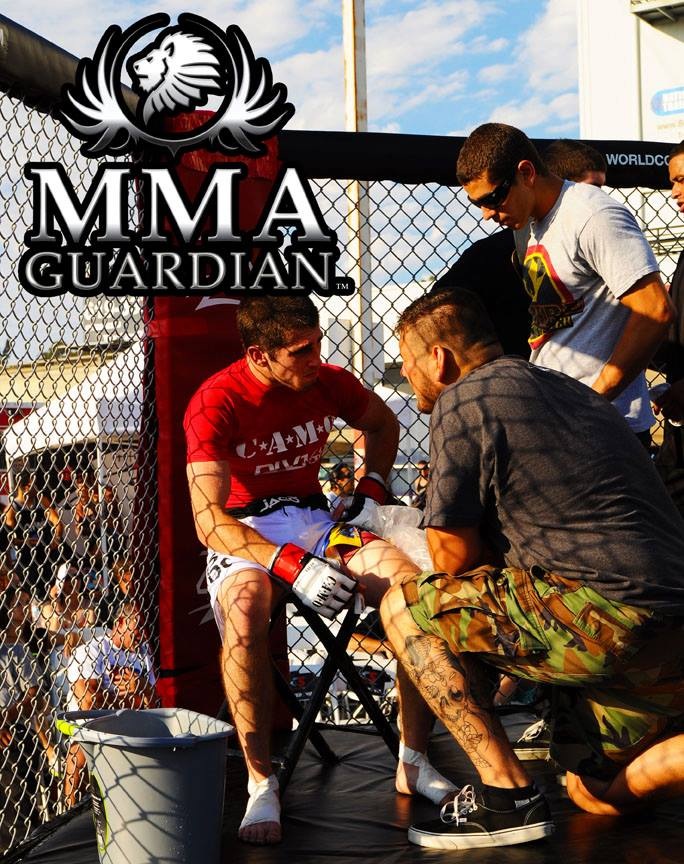
THE GLADIATOR
I had to puzzle out the deepest answer I was seeking in these interviews. The men told me, “I fight because it’s what I love. What I’m good at. The thrill of victory, the arm going up.” But why do you have to punch someone in the face to feel so good?
If man ever did evolve he stopped over 2,000 years ago. I realized MMA is not so new. I am watching the Spartan warrior and the Roman gladiator in their most primal fight for self-preservation. History is battle, the fiercest of physical arguments over land and power. My son has been learning, “Assyria falls to Babylon, Babylon to Persia, Persia falls to Alexander the Great.” The Conquerer has been redefining boundaries—of space and within himself—since ancient times, and on he goes. Man’s quest for greatness.
LIVING THE DREAM
The current of the past carries these fighters on to their future. Competitor Phillip Brown at the gym is not only chasing his dream but living it. He stays present so that the training moves him toward not only possibility but joy: “You wake up and realize it’s already tomorrow. You feel really alive. It’s a presence. All your hard work has paid off. All those minutes on the bag, all those tap-outs in practice. Tap-out means I need to get better. Martial arts is the art of bettering oneself. When that cage door shuts, I’m exactly where I wanna be: win, lose, or draw.” Who among us know exactly where we want to be?
THE ROAD AHEAD
Part of my fascination with these contenders stems from the mystery of the Other, as they are talented with their body in a way I can never hope to be. After a year’s sorry attempt in self-defense, I discovered I have little survival sense! But I’m drawn to the sport for the resonance; I fill with hope and pride in people who seek excellence in their craft, partly for this very pursuit in the roles I have played as mother and as writer. Whether or not I have succeeded remains a different matter. But what I’ve asked the competitors were really parenting questions that continue to replay themselves. How much do I push my son and at the same time free him—to borrow from Gloria Vanderbilt—to follow his bliss? How do I encourage him to refuse distractions from his purpose? How to reconcile the wisdom of balance with the virtues I prize: stamina, discipline, passion? You lose, sometimes excise, a part of yourself for the greater gain on the hot trail of dreams.
“The tragedy in life doesn’t lie in not reaching your goal. The tragedy lies in having no goal to reach. It isn’t a calamity to die with dreams unfulfilled, but it is a calamity not to dream.” Benjamin Mays (1894-1984), American minister and educator


Leave a Reply to Holistic WayfarerCancel reply